Hard water leaves its mark. Soap scum on shower doors, chalky white buildup around faucets, stiff laundry, and appliances that die young. If you’ve noticed these signs, you’re dealing with dissolved calcium and magnesium, minerals that shorten the lifespan of your water heater, clog pipes, and make cleaning a constant battle. A water softener removes those minerals before they wreak havoc. This guide breaks down the top-rated systems for 2026, what to look for when buying, and how to install and maintain one yourself.
Table of Contents
ToggleKey Takeaways
- A water softener removes hard water minerals (calcium and magnesium) through ion exchange, reducing energy costs by up to 25% and extending appliance lifespan.
- Salt-based softeners like the Culligan HE Smart and Fleck 5600SXT are the gold standard for true hardness removal, with salt-based systems outperforming salt-free alternatives for gpg levels above 10.
- Calculate the right home water softener system size by multiplying your daily water usage by hardness level in grains per gallon—aim for a unit that regenerates every 3–7 days efficiently.
- Metered regeneration systems save salt and water compared to timed systems, while dual-tank options ensure continuous soft water 24/7 for large households.
- Most homeowners can install a water softener in 3–5 hours with basic plumbing skills, but always follow local plumbing codes and maintain proper drain air gaps to prevent backflow.
- Regular maintenance—refilling salt, checking for salt bridging, and cleaning the brine tank annually—keeps your system operating at peak performance for 10–15 years.
What Is a Water Softener and Why Do You Need One?
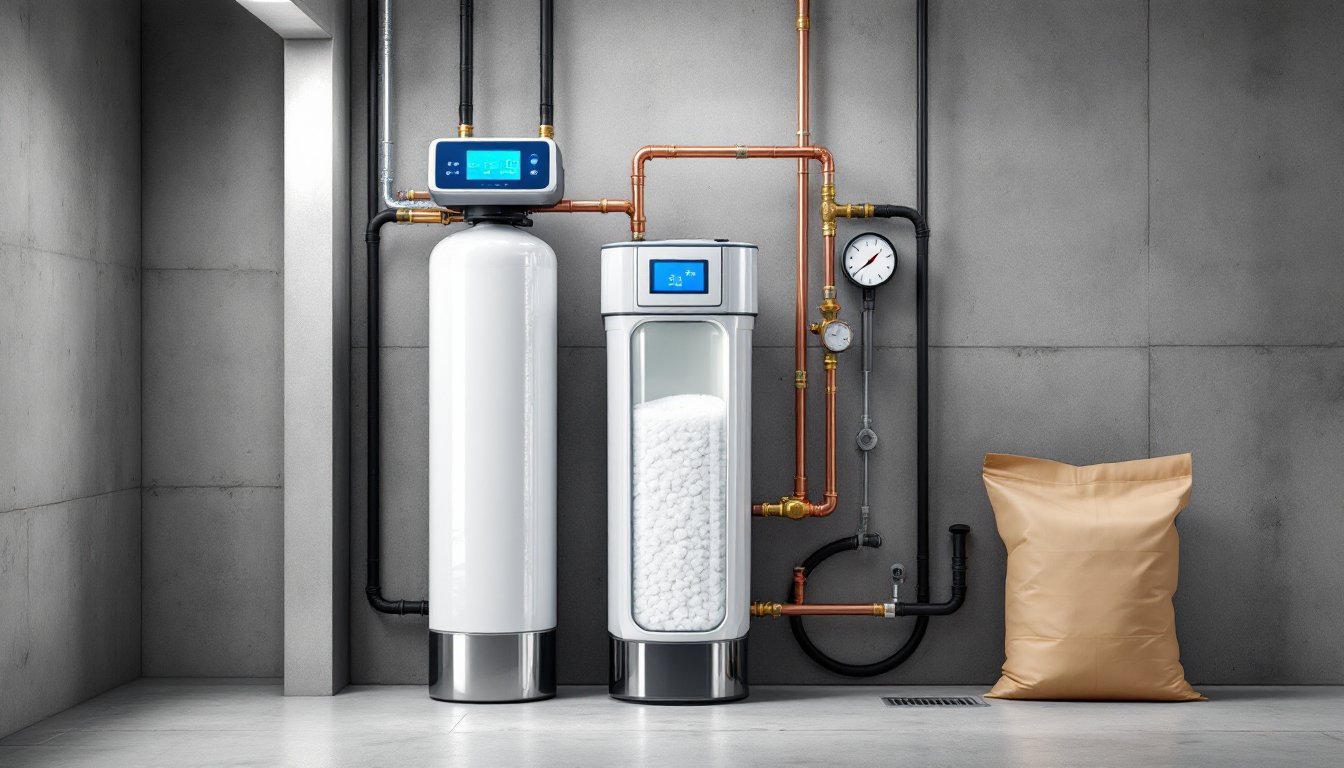
A water softener is a mechanical filtration system that removes hardness minerals, primarily calcium and magnesium, from your water supply through a process called ion exchange. The system uses a tank filled with resin beads charged with sodium ions. When hard water flows through, calcium and magnesium ions swap places with sodium ions, leaving soft water to flow through your home.
Hard water isn’t a health risk, but it’s expensive over time. It reduces the efficiency of water heaters by up to 25%, leading to higher energy bills. It builds scale inside pipes, reducing flow and eventually causing blockages. Soap and detergent don’t lather well in hard water, so you use more product. And appliances like dishwashers and washing machines wear out faster.
You’ll know you have hard water if you see white residue on glassware, feel a film on your skin after showering, or notice your water heater making rumbling noises from scale buildup. You can confirm it with a water hardness test kit (available at hardware stores) that measures grains per gallon (gpg). Water over 7 gpg is considered hard: above 10 gpg, a softener becomes a worthwhile investment.
Top-Rated Home Water Softener Systems for 2026
Salt-Based Water Softeners
Salt-based systems are the gold standard for removing hardness. They use ion exchange technology and require periodic refills of sodium chloride (rock salt or solar salt). Here are the top performers:
Culligan HE Smart Whole House Water Softener: This unit handles homes with up to 6 bathrooms and uses demand-initiated regeneration, meaning it only recharges the resin when necessary, saving salt and water. The smart controls track usage and alert you when salt runs low. It’s a solid choice for larger households (4+ people) with very hard water (15+ gpg). Expect to pay $1,500–$2,500 depending on region and dealer installation fees.
Fleck 5600SXT Water Softener: A DIYer favorite. The Fleck valve is one of the most reliable in the industry, with digital metering and easy programming. Comes in capacities from 32,000 to 80,000 grains, so you can size it to your household. The unit is sold as a complete system with resin tank, brine tank, and bypass valve. Installation is straightforward for anyone comfortable with basic plumbing. Costs run $400–$800 depending on capacity, making it one of the best values available.
Rheem Preferred 32,000-Grain Water Softener: Available at big-box stores, this 32,000-grain capacity model works well for smaller homes (1–3 bathrooms). It features a time-initiated regeneration cycle, which isn’t as efficient as demand-initiated but keeps the unit affordable. Good option if you’re on a budget and have moderate hardness (10–15 gpg). Price hovers around $500–$700.
According to product reviews on Good Housekeeping, salt-based softeners consistently outperform salt-free alternatives in true hardness removal, particularly in homes with gpg levels above 10.
Salt-Free Water Conditioners
“Salt-free” is a bit of a misnomer, these systems don’t remove hardness minerals: they condition water by altering the structure of minerals so they don’t stick to surfaces as easily. They’re technically called template-assisted crystallization (TAC) or salt-free conditioners. They won’t make soap lather better, but they reduce scale buildup.
Aquasana Whole House Salt-Free Conditioner: This system combines TAC conditioning with carbon filtration to remove chlorine and sediment. It’s rated for 1,000,000 gallons or 10 years, whichever comes first. No electricity, no backwashing, no drain hookup, just inline installation. Best for moderate hardness (under 10 gpg) or for homeowners who want to avoid sodium discharge into septic systems. Costs $1,500–$2,200 depending on size and filtration add-ons.
SpringWell FutureSoft: Uses Nucleation Assisted Crystallization (NAC) media to neutralize hardness without adding salt. It’s maintenance-free (no regeneration cycles, no salt) and works well for homes on well water with iron issues, as it also helps prevent iron staining. Rated for households up to 6 bathrooms. Price is around $1,600–$2,000.
If you’re in an area that restricts salt-based softeners due to environmental concerns about sodium in wastewater, salt-free conditioners are your best bet.
How to Choose the Right Water Softener for Your Home
Sizing a water softener correctly means understanding two numbers: your water’s hardness level (in grains per gallon) and your household’s daily water usage.
Start with a water test. Most municipal water suppliers publish annual water quality reports online. If you’re on a well, buy a test kit or send a sample to a lab. You need the hardness level in gpg.
Next, estimate daily water use. The average person uses 80–100 gallons per day. Multiply by the number of people in your home. A family of four uses roughly 320–400 gallons daily.
To find required capacity, multiply daily water usage by hardness level. Example: 400 gallons/day × 12 gpg = 4,800 grains removed per day. Softeners list capacity in total grains (e.g., 32,000-grain, 48,000-grain). You want a system that can handle your usage for 3–7 days between regeneration cycles. For the family above, a 32,000-grain system would regenerate every 6–7 days, which is efficient.
Buy slightly larger if you have guests often, do a lot of laundry, or plan to add bathrooms.
Other features to consider:
- Metered vs. timed regeneration: Metered systems regenerate based on actual water use, saving salt and water. Timed systems regenerate on a schedule, which wastes resources if usage varies.
- Single-tank vs. dual-tank: Single-tank systems regenerate in the middle of the night. Dual-tank systems ensure soft water 24/7 because one tank is always online, ideal for large households or businesses.
- Digital controls: Look for systems with backlit displays, error alerts, and usage tracking.
- Bypass valve: Essential for installation and servicing. Most systems include one.
- Warranty: Resin tanks should have at least a 10-year warranty: control valves at least 5 years.
For cost guides and contractor recommendations if you’re not tackling installation yourself, resources like Angi provide regional pricing and vetted installer reviews.
One last note: if your water is over 20 gpg or contains iron, sediment, or sulfur, consider a pre-filter or a system designed for problem water. High iron levels (above 0.3 ppm) can foul resin beads quickly.
Installation and Maintenance Tips for DIY Homeowners
Most homeowners with basic plumbing skills can install a water softener in 3–5 hours. You’ll need a location near the main water line, a drain line for backwash discharge, and a 120V electrical outlet for the control valve. Some jurisdictions require a plumbing permit for water softener installation, check local codes before starting.
Tools and materials you’ll need:
- Pipe cutter or hacksaw
- Adjustable wrenches
- Teflon tape or pipe thread sealant
- PVC or copper fittings (depending on your existing plumbing)
- Drain tubing (usually 1/2″ or 5/8″)
- Safety glasses and gloves
Installation steps:
- Shut off the main water supply and open a faucet to drain pressure.
- Cut into the main cold water line after the pressure tank (if you have a well) or after the main shutoff valve (municipal water). Leave enough room to install a bypass valve.
- Install the bypass valve on the softener’s inlet and outlet ports using Teflon tape on threads.
- Connect the softener to the main line using compression fittings, soldered copper, or SharkBite push-fit connectors (easiest for DIYers).
- Run drain tubing from the control valve to a floor drain, standpipe, or laundry sink. Do not connect it directly to a waste line, it must have an air gap of at least 1.5 inches per plumbing codes to prevent backflow.
- Plug the control valve into a dedicated outlet. Use a surge protector.
- Fill the brine tank with water softener salt (not table salt or rock salt for sidewalks). Use pellets or solar salt: avoid rock salt with heavy impurities.
- Open the bypass valve slowly, check for leaks, then run the initial regeneration cycle per the manufacturer’s instructions. This can take 1–2 hours.
Detailed tutorials on plumbing connections and troubleshooting common installation issues can be found on Family Handyman, which offers step-by-step visuals for various pipe materials.
Ongoing maintenance:
- Refill salt when the level drops below 1/4 full in the brine tank. Don’t let it run empty.
- Every 3–4 months, check for salt bridging (a hardened crust above water in the brine tank). Break it up with a broom handle.
- Clean the brine tank annually. Shut off water, scoop out salt, vacuum out sediment, then refill.
- If you notice a drop in water softness, regenerate manually and check that the resin tank hasn’t lost capacity (typical lifespan: 10–15 years).
- Replace pre-filters every 3–6 months if your system has them.
Softeners discharge brine during regeneration, which can affect septic systems. If you’re on septic, size your drainfield appropriately or direct backwash to a separate drywell, consult a septic professional if unsure.
Conclusion
Installing a water softener pays off in lower utility bills, longer appliance life, and easier cleaning. Match the system to your hardness level and household size, plan the plumbing run carefully, and keep the salt tank topped off. With the right unit and basic upkeep, you’ll have soft water for a decade or more.