Spotting ants trailing across your kitchen counter or a spider lurking in the corner isn’t just unsettling, it’s a sign that pests have found their way into your home. Ortho Home Defense Indoor Insect Killer has become a go-to solution for homeowners dealing with unwanted indoor invaders. This product promises long-lasting protection with a simple application process, but does it deliver? This guide breaks down how it works, proper application techniques, safety considerations, and whether it’s the right choice for your home.
Table of Contents
ToggleKey Takeaways
- Ortho Home Defense Indoor Insect Killer uses bifenthrin to kill pests on contact and creates a residual barrier that lasts up to 12 months on non-porous surfaces like baseboards and window frames.
- Proper application requires thorough surface prep, vacuum and cleaning, then a continuous 4-inch wide spray band applied at a steady pace for maximum effectiveness against ants, roaches, and spiders.
- For optimal results, keep people and pets away from treated areas for 2 hours, avoid cleaning baseboards for 7 days after application, and reapply seasonally or every 6-12 months for maintenance.
- Ortho indoor home defense is highly effective against ants and roaches (24-48 hours) but has limited effectiveness against bed bugs and termites, which require professional treatment.
- Safety precautions include wearing gloves, ensuring ventilation, keeping the product away from food prep surfaces, and avoiding use in homes with aquariums or pets with chemical sensitivities.
- This product delivers best results for light to moderate infestations and preventative maintenance when combined with sanitation practices, moisture control, and sealing entry points.
What Is Ortho Home Defense Indoor Insect Killer?
Ortho Home Defense Indoor Insect Killer is a ready-to-use insecticide spray designed specifically for interior pest control. The product comes in a trigger-spray bottle, typically in 1.1-gallon or smaller sizes, with a comfortable wand applicator for treating baseboards, entry points, and other common pest pathways.
The active ingredients, bifenthrin (a synthetic pyrethroid) at 0.05% concentration, target the nervous systems of insects on contact and through residual exposure. Unlike aerosol bug sprays that require direct hits, this formula creates a barrier that continues working for up to 12 months according to the manufacturer’s claims, though real-world performance varies based on surface type and environmental conditions.
The product is specifically formulated for indoor use with a no-stain, odor-free formula that dries clear on most surfaces. It’s marketed for use on non-porous surfaces like baseboards, window frames, door thresholds, and behind appliances, areas where pests typically enter or travel through your home.
How Ortho Indoor Home Defense Works
The product operates on two fronts: contact kill and residual barrier protection. When insects walk across treated surfaces, the bifenthrin transfers to their bodies and penetrates their exoskeleton. Once absorbed, it disrupts sodium channels in their nervous system, causing paralysis and death within minutes to hours depending on the pest size and species.
The residual effect comes from the formula’s ability to bind to surfaces after drying. The active ingredient remains on baseboards, cracks, and crevices where pests travel, continuing to affect new insects that cross treated areas. This is why application placement matters more than soaking an entire room, you’re creating strategic barriers along pest highways.
One gallon of product covers approximately 1,100 linear feet when applied as directed, which is enough to treat the average home’s entire perimeter baseboard system multiple times. The spray should be applied in a continuous 4-inch band along surfaces for optimal coverage. Pests don’t need to walk through a puddle: a thin, even layer provides sufficient exposure.
Temperature and humidity affect performance. In high-moisture areas like basements, the barrier may degrade faster. On sealed hardwood or tile, protection typically lasts longer than on porous concrete or unfinished wood.
Step-by-Step Application Guide for Maximum Effectiveness
Proper application makes the difference between mediocre results and season-long protection. Rushing or skipping prep work reduces effectiveness significantly.
Before You Start
Materials and tools needed:
- Ortho Home Defense Indoor Insect Killer (1.1-gallon bottle)
- Vacuum cleaner
- Damp cloth or mop
- Nitrile gloves (optional but recommended)
- Plastic drop cloth (if treating near furniture)
Application Steps
-
Prep the area: Vacuum baseboards, corners, and cracks thoroughly. Dust and debris prevent the spray from adhering properly to surfaces. Wipe down baseboards with a damp cloth if they’re visibly dirty, then let them dry completely, the product needs clean, dry surfaces to bond effectively.
-
Clear the perimeter: Move furniture, pet beds, and storage boxes at least 6 inches away from baseboards. You need clear access to apply a continuous barrier without gaps.
-
Shake and prime: Shake the bottle briefly, then twist the nozzle to the “spray” setting. Point away from yourself and test spray into a sink or outside to ensure consistent flow.
-
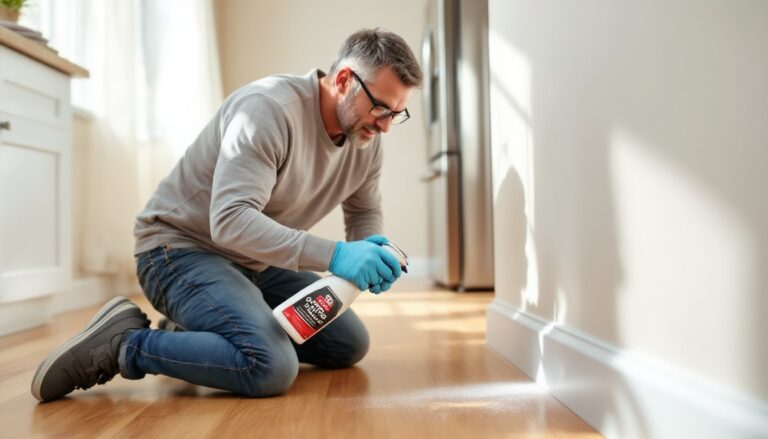
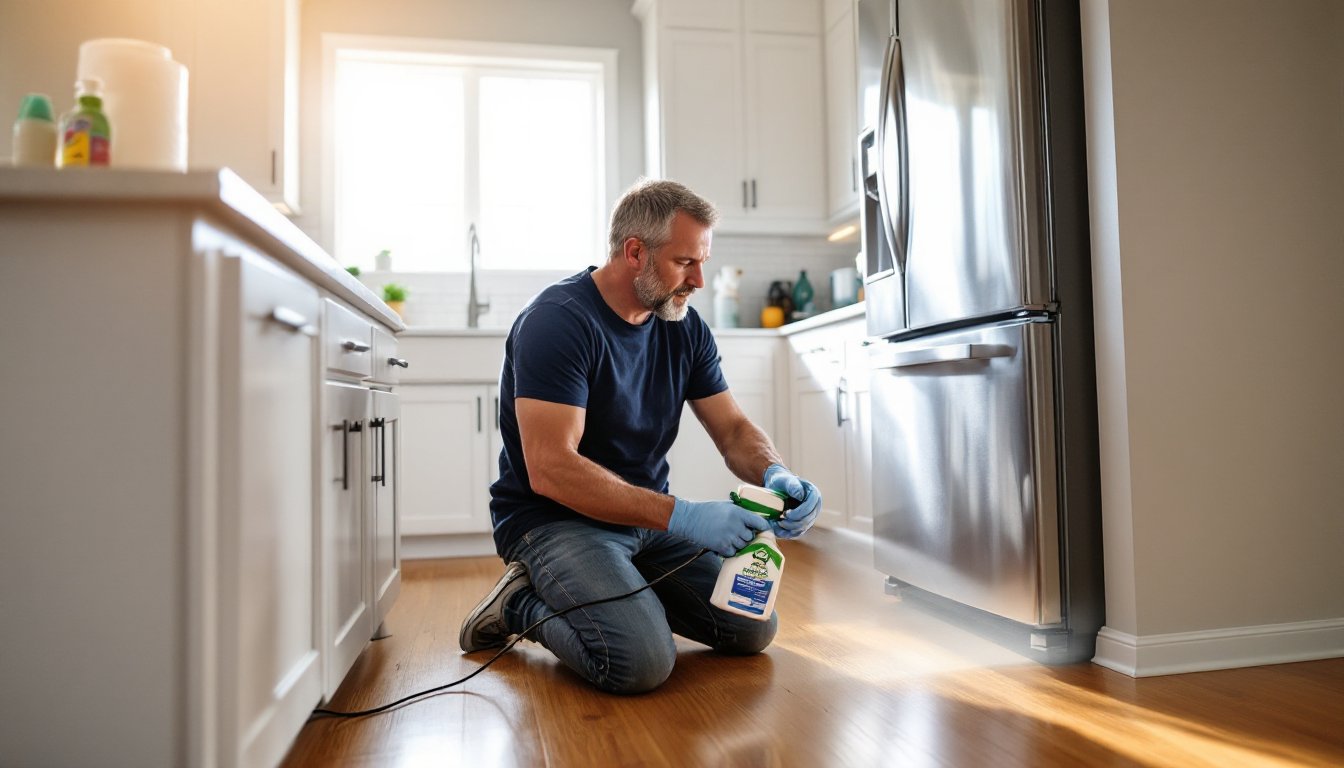
Apply the barrier: Hold the wand 6-8 inches from the baseboard and apply a steady, continuous 4-inch wide band along the entire baseboard perimeter. Move at a pace of about one foot per second, too fast leaves gaps, too slow creates puddles. Treat:
- All baseboards in affected rooms
- Door thresholds and frames
- Window sills and frames (interior side only)
- Areas behind and under appliances (pull out fridge, stove if accessible)
- Cracks around pipes and utility penetrations
-
Let it dry: Keep people and pets out of treated areas for at least 2 hours or until surfaces are completely dry to the touch. The product dries clear and shouldn’t leave visible residue on non-porous surfaces.
-
Don’t wipe it away: After application, resist the urge to clean baseboards for at least 7 days. Wiping or mopping removes the residual barrier you just applied.
Reapplication Schedule
For active infestations, inspect weekly and reapply to specific problem areas if you continue seeing pests after 2-3 weeks. For maintenance, most homeowners reapply every 6-12 months, or seasonally in spring and fall when pest pressure increases.
Safety Precautions and Pet-Friendly Usage Tips
While marketed as safe for indoor use, bifenthrin is still a pesticide that requires careful handling, especially in homes with children, pets, or residents with chemical sensitivities.
During Application
- Wear nitrile gloves if you have sensitive skin, though direct skin contact with the dried product is considered low-risk by the EPA.
- Ensure adequate ventilation. Open windows during application to disperse any aerosol mist.
- Never spray near food prep surfaces, dishes, or utensils. If overspray occurs, clean immediately with soap and water.
- Keep children and pets out of the room during application and until surfaces are fully dry (typically 2 hours).
Pet Considerations
Dogs and cats can safely return to treated areas once surfaces are dry. But, the product is highly toxic to fish and aquatic organisms, never apply near aquariums, and cover tanks during application if they’re in the treatment area.
For homes with birds, reptiles, or small mammals (hamsters, guinea pigs), remove cages from the room during application and wait at least 4 hours before returning them.
Health and Environmental Notes
Bifenthrin is classified as a possible human carcinogen by the EPA based on animal studies, though residential exposure levels are considered minimal when used as directed. If you’re pregnant, have asthma, or are chemically sensitive, consider having someone else apply the product or choose alternative pest control methods.
Never apply to surfaces where children crawl or play directly. If treating a nursery or playroom, apply only to the perimeter and ensure thorough drying before returning furniture and toys.
Disposal: Don’t pour leftover product down drains. Most municipalities accept pesticides at hazardous waste collection events. Check your local guidelines.
Common Pests Eliminated and Expected Results
Ortho Home Defense Indoor targets a broad spectrum of household pests, but effectiveness varies by species and infestation severity.
High Effectiveness
Ants (including carpenter ants, odorous house ants, and pavement ants): Results typically appear within 24-48 hours. You may see increased activity initially as ants cross treated barriers and carry the product back to colonies. Many reviews, including those from expert testing panels, highlight this product’s effectiveness against ant infestations.
Roaches (German, American, Oriental species): Contact kill occurs within hours. For established infestations, combine with baits since roaches hiding in wall voids won’t cross barriers until they forage.
Spiders (including brown recluse and black widow): Effective barrier protection. Spiders that walk across treated surfaces die within 12-24 hours.
Moderate Effectiveness
Centipedes and millipedes: Barrier works well, but these pests often indicate moisture problems that need separate attention.
Silverfish and firebrats: Takes longer (3-5 days) since they’re more resistant to pyrethroids.
Fleas: Provides supplemental control but shouldn’t be the primary treatment method. Address the source (pets, carpets) with species-specific products.
Limited Effectiveness
Bed bugs: Not recommended as a primary treatment. Bed bugs have developed significant resistance to pyrethroids. Professional heat treatment or other methods work better.
Termites: This product is not designed for termite control. Termite infestations require professional treatment.
Timeline Expectations
Most homeowners report noticeable reduction in pest sightings within one week of proper application. Complete elimination of an active infestation may take 2-3 weeks as the barrier affects new pests emerging from hidden areas.
Pros and Cons: Is Ortho Indoor Home Defense Right for Your Home?
Advantages
Long residual protection: When applied correctly to appropriate surfaces, the barrier lasts significantly longer than aerosol sprays or natural alternatives.
Broad-spectrum control: One product handles multiple pest types, reducing the need for species-specific treatments.
Easy application: The trigger wand design is more user-friendly than pump sprayers or professional equipment. No mixing or measuring required.
No visible residue: Dries clear on most surfaces without staining when applied as directed.
Cost-effective: At approximately $10-15 for 1.1 gallons (prices vary by region), it’s cheaper than monthly professional service for mild to moderate pest issues.
Disadvantages
Chemical concerns: Synthetic pyrethroid use indoors isn’t suitable for everyone, particularly homes with chemical sensitivities or strict organic preferences.
Surface limitations: Works best on non-porous surfaces. Less effective on carpets, fabric, or heavily textured walls.
Not a comprehensive solution: Doesn’t address nest elimination or breeding sources. You’re treating symptoms, not necessarily the root cause.
Aquatic toxicity: High risk to fish and amphibians means extra precautions in homes with aquariums or ponds nearby.
Resistance issues: Some pest populations (particularly German cockroaches and bed bugs in urban areas) have developed pyrethroid resistance, reducing effectiveness.
Best Use Cases
This product works best for preventative maintenance and light to moderate infestations of ants, spiders, and roaches in homes where chemical pesticides are acceptable. It’s ideal for seasonal application before pests become active.
When to Call a Professional
Consider professional pest control if:
- Infestations persist after two proper applications
- You’re dealing with bed bugs, termites, or carpenter ants (structural threats)
- Pests are entering through structural defects that need repair
- You have health concerns about chemical application
Many home technology guides and product review sites now cover smart pest detection systems that can complement or replace chemical treatments, worth considering if you’re building a connected home ecosystem.
Conclusion
Ortho Home Defense Indoor Insect Killer provides a practical, affordable barrier against common household pests when applied correctly. The key to success lies in thorough surface prep, continuous barrier application along pest pathways, and allowing adequate drying time before returning furniture and pets. While it won’t solve every pest problem, particularly heavy infestations or species with pyrethroid resistance, it’s a solid first-line defense for maintaining a pest-free home. Combine it with good sanitation practices, moisture control, and entry point sealing for the best long-term results.