Ants marching across the kitchen counter, spiders setting up camp in the basement, and roaches skittering when you flip on the bathroom light, these aren’t guests anyone wants. Ortho Home Defense is one of the most widely used bug barriers for a reason: it’s easy to apply, works on contact, and creates a perimeter that keeps pests out for months. But like any pesticide, effectiveness depends on proper application. Spray it wrong, and you’re wasting product and inviting bugs back in a week. This guide walks through exactly how to use Ortho Home Defense indoors and out, with practical tips on prep, application technique, safety, and reapplication schedules.
Table of Contents
ToggleKey Takeaways
- Ortho Home Defense kills insects on contact and creates a perimeter barrier lasting up to 12 months indoors and 3 months outdoors when applied correctly.
- Proper preparation—cleaning surfaces, sealing gaps, and treating baseboards and entry points—is essential to maximize the effectiveness of your Ortho Home Defense application.
- Apply a 4-inch-wide band along baseboards indoors and a 12-inch-wide band along the foundation outdoors, always following label directions and wearing appropriate protective equipment.
- Reapply Ortho Home Defense every 6 months indoors and every 2–3 months outdoors, depending on weather conditions and pest activity levels.
- Combine chemical barriers with exclusion tactics like caulking cracks, sealing utility penetrations, and maintaining proper sanitation for long-term pest prevention.
- Allow surfaces to dry completely (30 minutes to 1 hour indoors, at least 1 hour outdoors) before children or pets enter treated areas to ensure safety.
What You Need to Know Before Using Ortho Home Defense
Ortho Home Defense comes in a ready-to-use trigger spray bottle, no mixing, no measuring. The active ingredients (typically bifenthrin or other pyrethroids) kill insects on contact and leave a residual barrier that continues working for up to 12 months indoors and up to 3 months outdoors, according to the manufacturer.
Before you start spraying, check the label for the specific product variant you have. Ortho makes several formulas: Max Indoor Insect Barrier, Home Defense Insect Killer for Lawn & Landscape, and others. Each is designed for different applications, so using an outdoor formula indoors (or vice versa) isn’t recommended.
Read the entire label first. Federal law requires it, and it’s where you’ll find critical info about target pests, surface compatibility, drying time, and re-entry intervals. Most formulas are safe for use around kids and pets after surfaces dry completely, but you’ll want to keep everyone out of treated areas during application.
Plan your application on a day when you can ventilate well and keep people and pets away for at least 1–2 hours. If anyone in your household has asthma, chemical sensitivities, or respiratory issues, take extra precautions or consider professional pest control services.
Preparing Your Home for Indoor Application
Prep work makes or breaks your barrier. Bugs travel along edges, cracks, and gaps, so your goal is to treat those pathways, not carpet the whole floor in pesticide.
Start with a thorough cleaning. Vacuum baseboards, corners, and under appliances. Wipe down surfaces with a damp cloth to remove dust, grease, and grime. Pesticides bond better to clean surfaces, and you don’t want to seal dirt and food residue under a chemical barrier.
Move furniture and appliances away from walls if possible, especially in kitchens, bathrooms, and laundry rooms where pests are most active. You need access to the baseboard-to-floor junction, that’s your primary treatment zone.
Clear clutter from closets, pantries, and storage areas. Cardboard boxes, stacks of paper, and piles of fabric give bugs places to hide. If you can’t treat the surface, bugs can still live there.
Check for gaps and cracks around pipes, vents, electrical outlets, and windows. Caulk or foam-seal these openings before you spray. Pesticide isn’t a substitute for exclusion, plugging entry points is the best long-term defense.
Finally, cover or remove pet bowls, toys, and food prep surfaces. Even though the product is labeled for indoor use, you don’t want overspray landing where food or pet mouths go.
Step-by-Step Application Process Inside Your Home
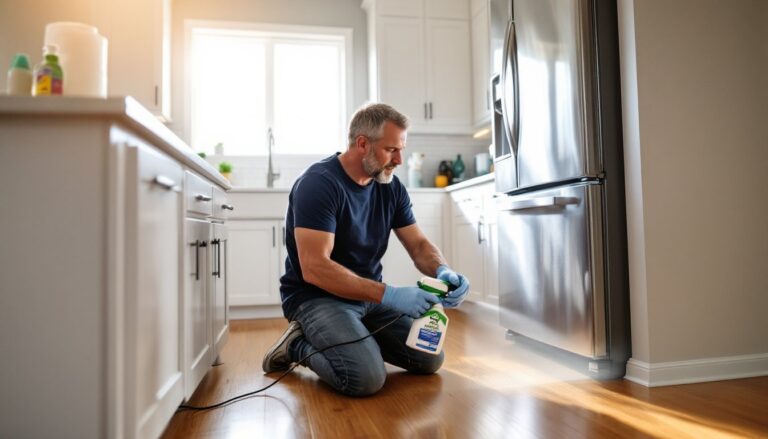
With prep done, you’re ready to apply. Put on safety glasses and nitrile gloves before you start. Ortho Home Defense is low-toxicity, but direct skin and eye contact can still cause irritation.
Shake the bottle well. The active ingredient can settle, especially if the bottle’s been sitting in the garage through winter.
Test the spray trigger on a scrap surface or outside to make sure it’s working and to get a feel for the spray pattern. The nozzle typically delivers a fan spray, not a narrow stream.
Open windows and turn on fans to ventilate the space. You’re not applying enough to fog the room, but airflow helps with drying and reduces fumes.
How to Apply Along Baseboards and Entry Points
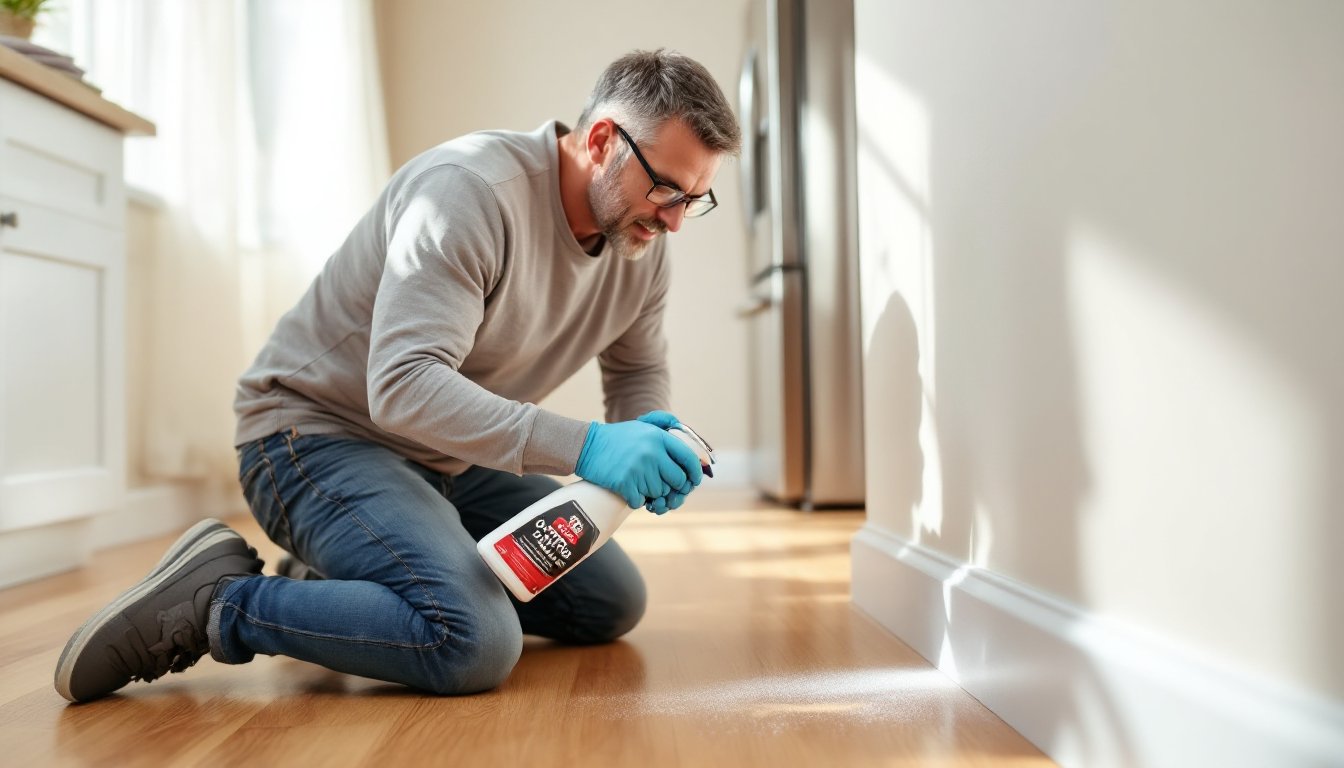
Hold the spray nozzle 4 to 6 inches from the surface and apply a continuous 4-inch-wide band along the baseboard where it meets the floor. Move steadily, don’t soak the surface, but don’t skip spots either. A light, even coat is the goal.
Target these key areas:
- Baseboards in all rooms, especially kitchens, bathrooms, and basements
- Around door frames and thresholds (interior and exterior doors)
- Window sills and frames
- Behind and under appliances (stoves, refrigerators, washers, dryers)
- Along plumbing pipes under sinks
- Around utility entry points (HVAC vents, cable/electrical pass-throughs)
- Closet perimeters and storage room edges
Don’t spray directly on carpet, upholstered furniture, or bedding. The label specifies hard surfaces and the junction where surfaces meet. If you need to treat cracks in drywall or gaps in trim, a thin application is fine, but avoid soaking porous materials.
Work your way around each room methodically. It’s easy to lose track of what you’ve treated, so start at a doorway and work clockwise (or counterclockwise) until you return to your starting point.
Allow treated surfaces to dry completely before allowing pets or kids back into the area. Drying time varies with temperature and humidity but typically takes 30 minutes to an hour. The surface should be dry to the touch and not tacky.
Applying Ortho Home Defense to Outdoor Perimeters
Outdoor application is your first line of defense. Treat the exterior perimeter before bugs make it inside, and you’ll cut down indoor sightings dramatically.
Timing matters. Apply when no rain is forecast for at least 24 hours. Rain within the first few hours after application can wash away the product before it bonds to surfaces. Early morning or late afternoon works best, avoid windy conditions that can drift spray onto plants or unintended surfaces.
Put on your gloves, safety glasses, and long sleeves. You’ll be working lower to the ground and near plants, so overspray is more likely to contact skin.
Walk the perimeter of your home and identify the foundation line where siding meets the ground. That’s your primary treatment zone. Also note:
- Entry points: doors, garage openings, vents, utility penetrations
- Cracks in the foundation or gaps in siding
- Areas where insects are active (ant trails, spider webs, wasp nests)
Application technique:
- Spray a 12-inch-wide band along the foundation, starting at ground level and extending up the wall. The bottom 6 inches of the foundation and the ground immediately adjacent are critical, this is where most crawling insects travel.
- Treat door and window frames on the exterior, focusing on thresholds, jambs, and the perimeter where the frame meets the siding.
- Spray around potential entry points: weep holes in brick, crawl space vents, dryer vents, AC line penetrations, and outdoor electrical boxes.
- Avoid spraying plants, mulch, and decorative stone directly. If bugs are nesting in mulch beds, treat the perimeter of the bed but not the mulch itself, many pest control products work best on non-porous surfaces.
- Don’t treat surfaces where runoff could enter storm drains, ponds, or streams. Pyrethroids are toxic to aquatic life.
For patios, decks, and porches, treat the underside of railings, post bases, and the junction where the structure meets the house. Don’t apply to surfaces where people or pets will have prolonged contact (like deck floors or patio furniture).
Allow outdoor applications to dry for at least 1 hour before kids or pets access the area. If you’re treating a driveway or sidewalk, consider blocking access with caution tape or cones until it’s fully dry.
Safety Tips and Best Practices for Application
Ortho Home Defense is labeled for residential use, but “safe when used as directed” means following the label to the letter.
Personal protective equipment:
- Safety glasses or goggles to protect against accidental spray or splash
- Nitrile or chemical-resistant gloves (latex can degrade with some pesticide formulations)
- Long sleeves and pants for outdoor applications or extended indoor work
- Respirator or N95 mask if you have respiratory sensitivities or are treating a large area with poor ventilation
Ventilation is non-negotiable indoors. Open windows and use fans to exhaust treated air outside. Don’t rely on HVAC systems alone, they can recirculate fumes.
Keep kids and pets out during application and until surfaces are completely dry. Store the bottle out of reach, preferably in a locked cabinet or high shelf. The child-resistant trigger is a good feature, but it’s not foolproof.
Don’t mix products. If you’re using other pesticides or cleaning agents, apply them on separate days. Mixing chemicals can create hazardous reactions or reduce effectiveness.
If you accidentally spray on skin, wash immediately with soap and water. If it gets in your eyes, flush with water for 15 minutes and call Poison Control. If someone ingests the product, don’t induce vomiting, call emergency services right away.
Disposal: Don’t pour leftover product down drains or toilets. If the bottle is empty, rinse it three times and recycle if local facilities accept pesticide containers. Check with your municipality for hazardous waste collection days if you need to dispose of unused product.
How Often to Reapply and Maintenance Schedule
Ortho Home Defense isn’t a one-and-done treatment. Reapplication intervals depend on location and pest pressure.
Indoor applications: The manufacturer claims up to 12 months of protection indoors, but real-world results vary. High-traffic areas, humidity, and frequent cleaning can break down the barrier faster. Plan to reapply every 6 months as a baseline, more often if you’re still seeing bugs.
Outdoor applications: Outdoor treatments last about 3 months under normal conditions. Rain, irrigation, and UV exposure degrade the active ingredient faster. If you live in a high-humidity or high-rainfall area, reapply every 2 months during peak bug season (spring through early fall).
Spot treatments: If you see renewed activity in a specific area (like ants reappearing at one doorway), you can spot-treat that zone without redoing the entire perimeter. Clean the area first to remove any debris or old residue, then reapply.
Seasonal considerations: Pest pressure peaks in spring and summer, so that’s when you’ll need the most frequent reapplications. In fall and winter, many insects go dormant, and you can stretch intervals, but don’t skip treating entirely. Overwintering pests like cluster flies, boxelder bugs, and lady beetles look for warm indoor shelter as temperatures drop.
Monitor effectiveness by keeping a simple log: note application dates and any pest sightings. If bugs reappear within a few weeks of treatment, you may have missed key entry points, or you might be dealing with a pest that requires a different approach. For persistent infestations, especially termites, carpenter ants, or bed bugs, call a licensed pest control professional. Some problems are beyond DIY.
Integrate other tactics: Pesticide is just one tool. Seal cracks, fix leaky pipes, store food in airtight containers, and keep vegetation trimmed back from your foundation. The best home maintenance routines combine exclusion, sanitation, and targeted chemical control.