Termites cause over $5 billion in property damage annually in the United States, and most homeowner’s insurance doesn’t cover it. Finding mud tubes on your foundation or hollow-sounding wood doesn’t automatically mean you need to write a check for thousands in professional fumigation. Localized infestations caught early often respond to DIY treatment methods that cost a fraction of what exterminators charge. That said, termites are relentless, structural pests, not ants or roaches. Success depends on accurate identification, choosing the right treatment method, and knowing when the problem has outgrown a homeowner’s toolbox.
Table of Contents
ToggleKey Takeaways
- At home termite treatment with DIY methods like liquid termiticides, bait systems, and borate wood treatments can effectively eliminate localized, early-stage infestations at a fraction of professional costs.
- Accurate identification of termite type (subterranean vs. drywood) and location is critical before choosing a treatment method, as different species require different approaches and some are better handled by professionals.
- Liquid termiticide barriers require proper trenching, correct dilution rates, and reapplication every 5-10 years, while bait stations demand monthly monitoring for 12+ months and work for both termite species.
- Widespread infestations across multiple rooms, structural damage, drywood termites in attics or walls, or failed DIY treatments warrant professional pest control intervention costing $500-$2,500, which is far less than structural repairs.
- Spring swarming season brings increased termite activity, making it an ideal time to inspect high-risk zones like crawl spaces, foundation rim joists, and wood-to-soil contact areas for early detection.
Identifying Termite Infestations Before Treatment
You can’t treat what you haven’t confirmed. Termite damage often mimics rot, carpenter ant activity, or general aging, so verification comes first.
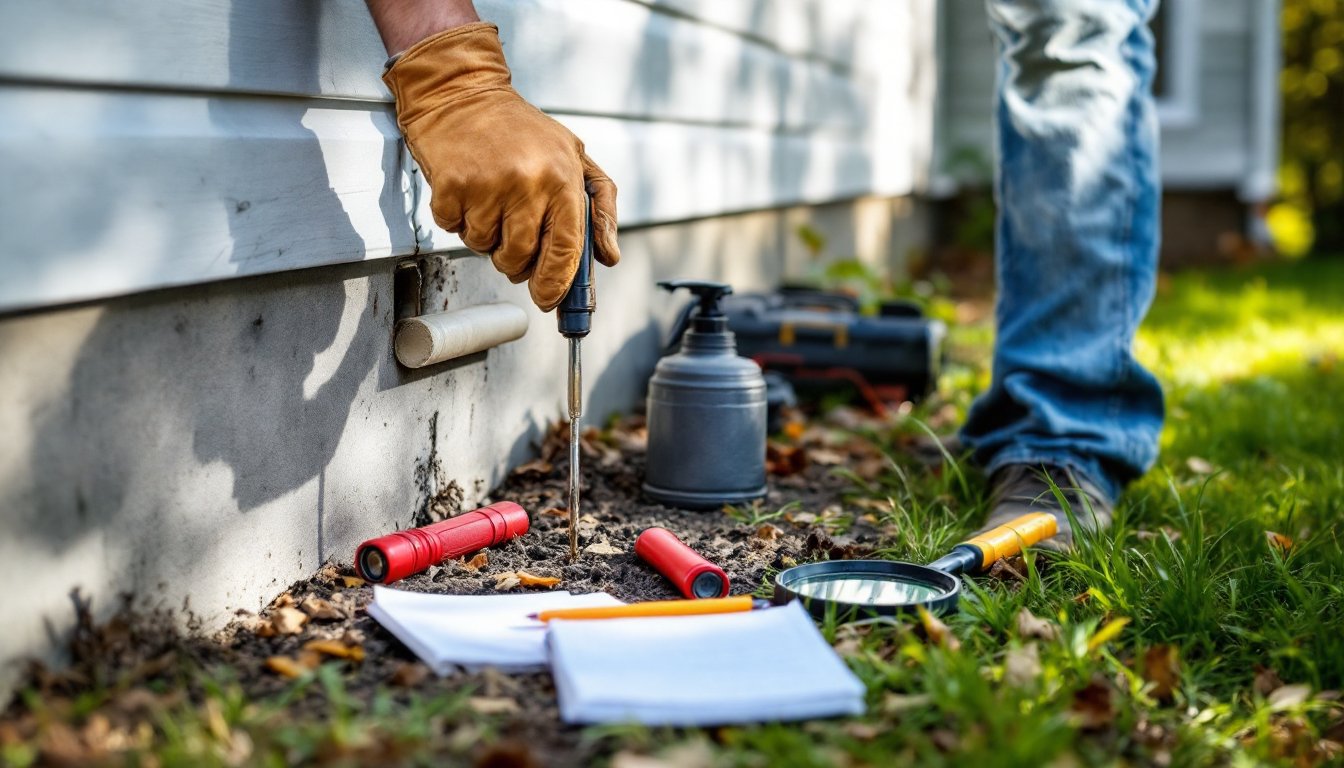
Subterranean termites (the most common type in the U.S.) build mud tubes, pencil-width tunnels made of soil and saliva, along foundation walls, floor joists, and pier supports. Break open a tube. If you see pale, soft-bodied insects with straight antennae, you’ve got active termites. Empty tubes don’t mean they’re gone: workers abandon routes temporarily.
Drywood termites skip the mud tubes entirely. Look for frass (pellets resembling sawdust or coffee grounds) near windowsills, baseboards, or furniture. Tap suspect wood with a screwdriver handle. If it sounds hollow or the screwdriver punches through easily, the interior’s likely compromised.
Check high-risk zones first: crawl spaces, basement rim joists, areas near plumbing penetrations, and any wood-to-soil contact (deck posts, stacked firewood, untreated siding). Use a flashlight and probe tool. Spring is peak swarming season for most species, so winged termites indoors or discarded wings near doors and windows are red flags.
If you’re uncertain whether you’re dealing with termites or carpenter ants, note the body shape. Termites have thick waists and equal-length wings: ants have pinched waists and uneven wing pairs. Misidentifying the pest wastes time and money on the wrong treatment.
DIY Termite Treatment Methods That Actually Work
DIY termite control works best for localized, accessible infestations. The three most effective homeowner methods are liquid termiticides, bait systems, and borate wood treatments. Each has specific use cases and limitations.
Liquid Termiticide Barriers
Liquid termiticides create a treated zone in the soil that kills termites on contact or when they carry the chemical back to the colony. Non-repellent formulations like fipronil or imidacloprid are far more effective than older repellent types, which termites simply avoid.
Application requires trenching around the foundation. Dig a trench 6 inches wide and 6 inches deep along the exterior foundation wall. For slab-on-grade homes, also trench along interior edges where possible (inside the garage, utility rooms). Mix the concentrate per label instructions, most call for dilution rates between 0.06% and 0.125% active ingredient.
Apply the solution using a pump sprayer or soil injection rod, targeting 4 gallons of finished solution per 10 linear feet of trench. Backfill the trench immediately after treatment. Also treat soil under concrete slabs by drilling holes every 12 to 18 inches along cracks, expansion joints, and perimeter edges, then injecting termiticide through the holes.
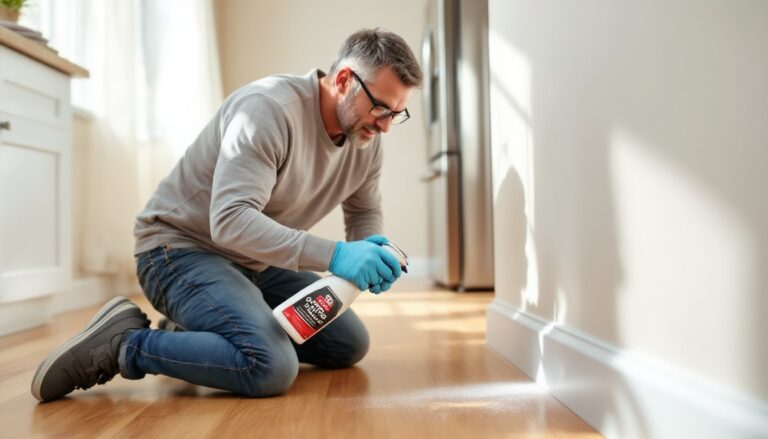
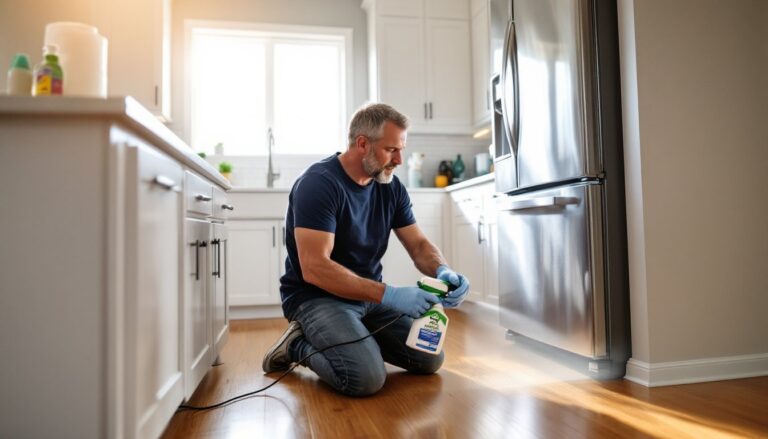
Safety note: Wear nitrile gloves, long sleeves, and safety goggles. Keep pets and children away from treated areas until the soil has dried completely. Non-repellent termiticides are low-toxicity to mammals but still require careful handling.
Liquid barriers degrade over time. Reapplication is typically needed every 5 to 10 years depending on soil type, rainfall, and product formulation. This method works well for subterranean termites but does nothing for drywood species.
Termite Baiting Systems
Bait stations are an alternative to liquid treatments, especially if you want to avoid chemical trenching or if the infestation is in a hard-to-trench area like beneath a patio slab. Stations contain cellulose attractant paired with a slow-acting insect growth regulator (IGR) like hexaflumuron or noviflumuron.
Install stations every 10 feet around the perimeter of the structure, using a soil auger or post-hole digger to create holes about 12 inches deep. Insert the station so the top sits flush with or just below grade. Bait formulations vary, some use wood monitors first, others incorporate active bait immediately.
Check stations monthly during the first year, then quarterly once termite activity is controlled. When termites feed on the bait, they carry the IGR back to the colony, disrupting molting and eventually collapsing the population. This process takes several months to a year, so baiting systems are not a quick fix.
Baiting works for both subterranean and drywood termites if stations are placed correctly, but it requires patience and consistent monitoring. Stations also need replacement cartridges when bait is consumed or degrades. This is a maintenance commitment, not a one-and-done solution.
Borate Wood Treatments
Borate compounds (disodium octaborate tetrahydrate, or DOT) penetrate wood and provide long-term protection against termites, wood-boring beetles, and fungal decay. They’re ideal for preventive treatment of exposed framing, crawl spaces, and new construction, and can also treat active infestations if the wood is accessible.
Borate is available as a powder (mix with water) or ready-to-use spray. For raw, unfinished wood, apply using a pump sprayer or paint roller, saturating all surfaces until the wood won’t absorb more. For finished or painted wood, drill small access holes and inject borate solution directly into galleries or wall voids using a syringe or injection system.
Borate works by ingestion, termites consume treated wood and die, but it also disrupts colony health when workers groom each other and transfer the compound. It’s non-volatile, low-toxicity to humans and pets, and doesn’t off-gas. Wear a dust mask when mixing powder and avoid overspray on metal fasteners, as borates can promote corrosion.
Limitations: borate leaches out if wood stays wet, so it’s unsuitable for ground-contact applications or areas with chronic moisture issues. It also won’t protect wood that’s already sealed or painted unless you drill and inject. For active DIY termite control methods, borate is best combined with another treatment rather than used alone.
When to Call a Professional Instead
Some termite situations are beyond DIY scope, and trying to go it alone can let the problem spread while you troubleshoot.
Call a licensed pest control operator if:
- The infestation is widespread. If you’re finding termite activity in multiple rooms, across multiple floors, or in load-bearing members (floor joists, rim beams, studs), professional fumigation or whole-structure treatment is warranted.
- Structural damage is evident. Sagging floors, cracked drywall, doors that no longer close properly, or visibly compromised framing mean the infestation has been active for months or years. A structural engineer may also need to assess repair needs.
- You’re dealing with drywood termites in hard-to-access areas. Drywood colonies nest entirely inside wood, often in attics, walls, or furniture. Tenting and fumigation with sulfuryl fluoride is the most reliable eradication method, and it requires certification and specialized equipment.
- Previous DIY treatments failed. If you’ve applied termiticide or bait stations and activity persists after six months, the colony may be too large or located outside the treatment zone.
- You have a slab foundation with interior activity. Treating under concrete requires drilling, high-volume injection, and equipment most homeowners don’t own.
Professional termite control typically costs between $500 and $2,500 depending on treatment type and home size, far less than repairing structural damage. Many companies also offer annual monitoring contracts, which can be worth the expense if your home is in a high-termite-pressure area.
When researching contractor options for termite treatment, verify that the company holds a pest control operator license in your state and ask for documentation of the products they’ll use, application rates, and warranty terms. Some states also require a Wood-Destroying Insect Report (WDIR) for real estate transactions, and only licensed pros can issue those.
If the infestation is modest and accessible, DIY methods can work, but don’t let pride or budget concerns delay necessary professional intervention. Termites don’t take weekends off, and a $1,000 treatment now beats a $15,000 floor joist replacement later.
Conclusion
DIY termite treatment is a viable option for early-stage, localized infestations if you’re willing to follow product labels, commit to monitoring, and recognize when the problem exceeds your tools. Liquid termiticides, bait systems, and borate wood treatments each have proven track records when applied correctly. But termites are colony insects with complex behaviors, and incomplete treatment just pushes them to untreated areas. For guidance on larger home improvement projects and contractor selection, consider consulting with professionals who can assess the full scope of damage and recommend the most effective long-term strategy.